2013-09-16

Roguelikes

These last few years, roguelikes have become an increasingly popular genre, especially within indie gaming. I've experienced their magic time and time again, so I'd like to share with you how they work and why they're so fun.

So what's a roguelike? Here's Wikipedia's definition :

The roguelike is a sub-genre of role-playing video games, characterized by level randomization and permanent death.

There is an official convention that defines what is considered a true roguelike. Games which share some elements of roguelikes but don't meet all criteria are called rogue-lites. These rogue-lites are much more popular and accessible than true roguelikes, and the games which I will mention in this article are technically rogue-lites.

Level randomization (or procedural generation) and permanent death are two defining characteristics of the genre. I'll start by discussing permanent death.

Death is Permanent

When there are consequences, choices  hold more meaning. When you know that failure means permadeath (and having to restart), gameplay becomes intense and victory is that much more satisfying.

Games like Fire Emblem and XCOM are known for having permadeath, but most people just restart their last mission in order to avoid losing characters. In roguelikes, there is no save reloading. Dead is dead.

Most roguelikes are played in quick sessions: you play until you win or die trying. I like this structure since I can often fit a quick play session in a busy day.

But wouldn't it be boring to restart the same game over and over again?

Procedural Generation

Procedural generation ensures that each playthrough feels different. Procedural generation means that levels are randomized each time you play. But they are built according to rules (or procedures) to ensure that they contain all necessary elements.

For example, a normal floor in The Binding of Isaac will always be built differently, but it will always contain a shop, an item room, two secret rooms and a boss room. Each time you enter a new floor, the game's code produces the floor according to the rules established by the game's author, ensuring that the game is balanced, consistent and playable.

The fact that the gameplay field is changed each time you play ensures that each session feels new and exciting, even after hours of experience.

Conclusion

Modern roguelikes remind me of playing games on the NES back in the day, minus the frustration. Like the NES games I used to play, roguelikes are

  • challenging;
  • intense;
  • skill-based;
  • relatively short;
  • and no saving during sessions.


But dying and restarting isn't nearly as frustrating since you won't have to replay the same levels: they are randomized each time. Also, roguelikes tend to have some kind of global progress that carries over, so even if death is permanent, you will have gained something from each run.

I'm hooked on roguelikes. Here's a list of my favourite ones:

The Binding of Isaac

The Binding of Isaac is the first roguelike I've played. Isaac is essentially a quirky twin-stick shooter. It's a cheap and accessible game, but it is also highly challenging. It's made by the designer of Super Meat Boy, after all. But once you get into the groove, the game is amazing. Each run lasts from half an hour to an hour and a half. There is a colossal amount of content in this seemingly simple game: the variety of enemies, items and rooms keeps the game interesting. I've played for approximately forty hours and haven't yet reached the final ending. A remake is currently in development.


The layout is Zelda-inspired, but it plays nothing like Zelda
Don't Starve

Don't Starve started out as more of a roguelike, but as development went on, the game was made easier and less roguelike-ish. The map is procedurally-generated and death is permanent, but you can save at anytime (since games can last upwards of five hours) and it's easy to escape death. It's still a really fun game though! The scavenging and survival reminded me of Minecraft.


And you can make dry fish!

FTL: Faster Than Light

FTL is a sci-fi exploration and ship combat game with an awesome success story. Although a bit too hard for my liking, I've played quite a bit and enjoyed every playthrough. It's one of the rare roguelikes with a heavy emphesis on storytelling. Explore the cosmos and see what you can find!


Good ship and crew

Rogue Legacy

I've just picked up Rogue Legacy this week, and let me tel you: I am hooked. I'm having so much fun exploring the ever-changing castle with my (now extremely long) fictional lineage. Each time you die, you choose your heir amongst your children, and each character has a few traits. The traits sometimes affect gameplay (such as size, weaknesses, or abilities) or aesthetics (such as colorblindness, vertigo, or insanity). Rogue Legacy is my favourite rogue-lite as of now. So much fun.


Let's play a game

Spelunky


I haven't played Spelunky, but I've heard great things about it. It's next on my list.

2013-08-19

La Vie d'Arcade : Écriture

Dans La Vie d'Arcade, le dialogue et les pensées sont représentés à l'écrit. Et puisque le jeu a de l'écriture en français, en anglais, en vieux acadien et en chiac, je me suis trouvé avec un peu d'un problème.

Comment devais-je représenter les langues et les accents à l'écrit?

Lorsqu'une phrase en français contient de l'anglais, le lecteur ne saura pas toujours comment lire la phrase. Par exemple : « La classe de français est point ma favorite. » Le « favorite » ici devrait être lu comme le mot anglais, mais le mot existe en français itou.

Je vais utiliser un système de couleurs pour différencier les langues. Le français, la langue la plus commune dans le jeu, sera blanc pour me sauver de la misère, et l'anglais sera gris. Comme ça, le joueur saura exactement quels mots appartiennent à quelle langue.

Mais dans le jeu, il n'y a pas juste l'opposition de l'anglais et du français : il y a aussi l'opposition du « bon » français et du français Acadien. Pour illustrer les mots et expressions qui appartiennent à la langue acadienne (ou qui font juste point partie du français standard), je vais utiliser la couleur jaune.


2013-08-12

Mental Health in Videogames

A friend's blog post has inspired me to think about mental health in videogames. How do videogames represent mental health?

Simulations are comprised of rules, and these rules create either a real or an imagined representation. For example, September 12's simulation creates an ideological representation according to the author's beliefs on America's war on terror. This representational property of videogames seems perfect for showing others how living with mental issues feels, yet there are unfortunately very few examples of videogames that tackle this issue successfully.

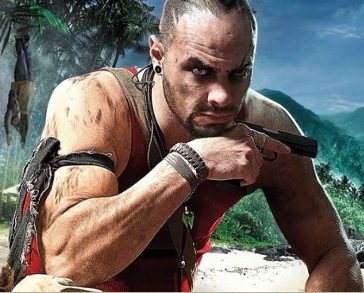
Most of the time, videogame characters with mental problems are antagonists. Their condition is used as a justification for their crazy diabolical plans or their extreme violence. This isn't a particularly good representation of mental issues since it teaches that these people are more likely to be violent or bad people. As I discussed in my blog post on violence, I believe that continued exposure to such ideological representations can influence the way we think about the real world.

Image from chud.com
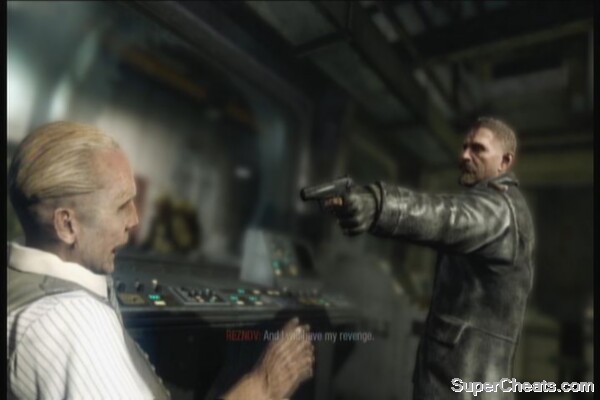
To make things worse, most mentally ill videogame characters, even the rare protagonists, often don't have realistically-portrayed conditions. Most of the time, mental issues are exaggerated in service of the plot.

The fact that people with mental issues are almost never well portrayed is problematic because it conveys false representations of mental illness. Popular culture, videogames included, influence the way we see certain things. If videogames consistently portray characters with mental problems as bad, violent and unrealistically exaggerated, isn't it possible that certain people might start believing these representations?

Image from supercheats.com
While not as widespread as the misrepresentation of women in videogames, the misrepresentation of mental illnesses is videogames is an important problem nonetheless. Is there a solution? Why yes, I think there is, thank you for asking.

We need more sympathetic characters with mental illnesses in videogames, and we need better representations of mental conditions. Instead of learning to fear people with mental health issues, we need to learn to better understand them.

To The Moon is the game that really pushed me to create this blog. My first blog post was about how much I loved the game. This Canadian game focuses on the life of a couple, one of which has a mental health condition. The game is character-driven, and as you uncover the past of the couple, you get to learn about the person's mental issue and how it affects the other people in their lives.


After playing the game, I found I had gained a better understanding of how people with that particular mental condition live and how it affects them and their loved ones. I'm no expert, but I personally thought the game did that particular mental issue justice. Like I said, I'm no expert, but this seems like one hell of a step in the right direction.


Update: I've just played Depression Quest, and it's a perfect example of a game putting the player in the shoes of someone living with a mental health problem, in this case depression. Very effective game.

Videogames can make the player understand people who are different. Videogames have enormous power, and it's a shame it hasn't been harnessed to its full potential in the past. However, with the indie and art games movements, more personal and experimental games are being made each year, just like To The Moon. And that's awesome. Let's hope more games try to fight the stigma surrounding mental health.

Extended reading :

Dys4ia: an autobiographical game about a transgender person's experience 

Depression Quest: A well-written and detailed Twine game that puts you in the shoes of someone living with depression.

Loneliness: the title says it all.

Actual Sunlight: a short interactive story about love, depression and the corporation.

and, of course, To The Moon.